aiThe connection between war and cancer is quite obvious. However, there are currently no statistics that show the impact of war on the number of cancer cases. It is virtually impossible to gather such data because millions of people have left Ukraine, and many in the occupied territories are inaccessible.
aiWhat is well known is that many factors influence the growth of cancer. The first is stress — but it is not the only one. On the front lines and in frontline territories, the environment is polluted by rocket fuel and military equipment. When buildings are hit, carcinogenic asbestos dust is released into the air. Fires produce heavy smog and carbon monoxide, which are especially dangerous for the respiratory system.
aiBut I will not begin my reflections with present-day Ukraine. Instead, let us return to 2014, when the hostile state initiated war against our country — a state we considered “fraternal” back then.
aiWhile there was no war on Russian territory, even then it scorched the souls of conscientious Russians.
aiHere's what I mean.
aiMy friend, the wonderful writer Lyubov B., lived in Moscow. (I am not giving her full name so as not to endanger her family if the Russian secret services see this publication.)
aiLyubov suffered greatly because of Russia's invasion of Ukraine. Her troubled conscience and acute sense of guilt for what her country was doing led to cancer. She herself felt this connection. And, a friend of hers — a poet who also took the war carried out by his country deeply to heart — died of cancer even earlier than she did.
aiThese are just two cases of honest Russians developing a fatal illness in connection with the war. But they are typical.
aiAfter Russia launched its full-scale invasion of Ukraine, Lyubov B.'s daughter wrote to me: people are afraid to speak openly about what is happening — and antidepressants are flying off the shelves in pharmacies.
The world is currently experiencing the spread of a terrible disease, whose symptoms are dictatorship, fascism, and the rule of the strong.
aiHonest Russians who oppose the war are a separate painful topic.
aiLet's return to our country.
ai
aiHundreds of thousands of people have died on the front lines. But soldiers are not only dying from direct hits. How many reports have we seen that read, “died in hospital after a long treatment,” or “could not overcome his illness due to his injuries.”
ai
aiHundreds of thousands of people have died on the front lines. But soldiers are not only dying from direct hits. How many reports have we seen that read, “died in hospital after a long treatment,” or “could not overcome his illness due to his injuries.”
aiLife on the front lines brings constant stress and ever-present death. Combined with environmental pollution, it is no wonder that cancer is on the rise.
aiHere are two victims. This time I will name them, because these soldiers are our heroes.
aiOleksiy KRYUTCHENKO, PhD in History, was the chief curator of the Museum of Archaeology at V. N. Karazin Kharkiv National University and a junior researcher at the Institute of Archaeology of the National Academy of Sciences of Ukraine. In 2014, when the anti-terrorist operation began, he volunteered to defend Ukraine and was wounded near the town of Shchastia. From the start of the full-scale war, he took part in the defense of Kharkiv and the Kharkiv region. In the fall of 2022, he was diagnosed with cancer. He fought the disease for a year and a half, but was unable to defeat this enemy. He died in March 2024.
aiEduard MAMNYTSKY, a mathematician by profession. From the beginning of the full-scale war, he volunteered for the front. He was the head of the support forces group of the 122nd separate battalion of the 113th separate brigade of the Ukrainian Armed Forces. He fought in Kharkiv, Sumy and Donetsk regions, in particular in Bakhmut. During his military service, he developed cancer and died in February 2024. According to doctors who have already observed similar cases, a possible cause was chemical attacks carried out by Russian forces against Ukrainian defenders.
aiI know these soldiers because they were graduates of V. N. Karazin Kharkiv National University, where I work. And how many more heroes have shared similar fates!
aiThe world is experiencing the spread of a terrible disease, whose symptoms are dictatorship, fascism, and the rule of the strong.
aiDo we have a cure for this scourge? Not yet, but our soldiers are conducting surgical operations to eradicate it. We are cutting off the illegal, terrorist offensive of Russia in Ukraine.
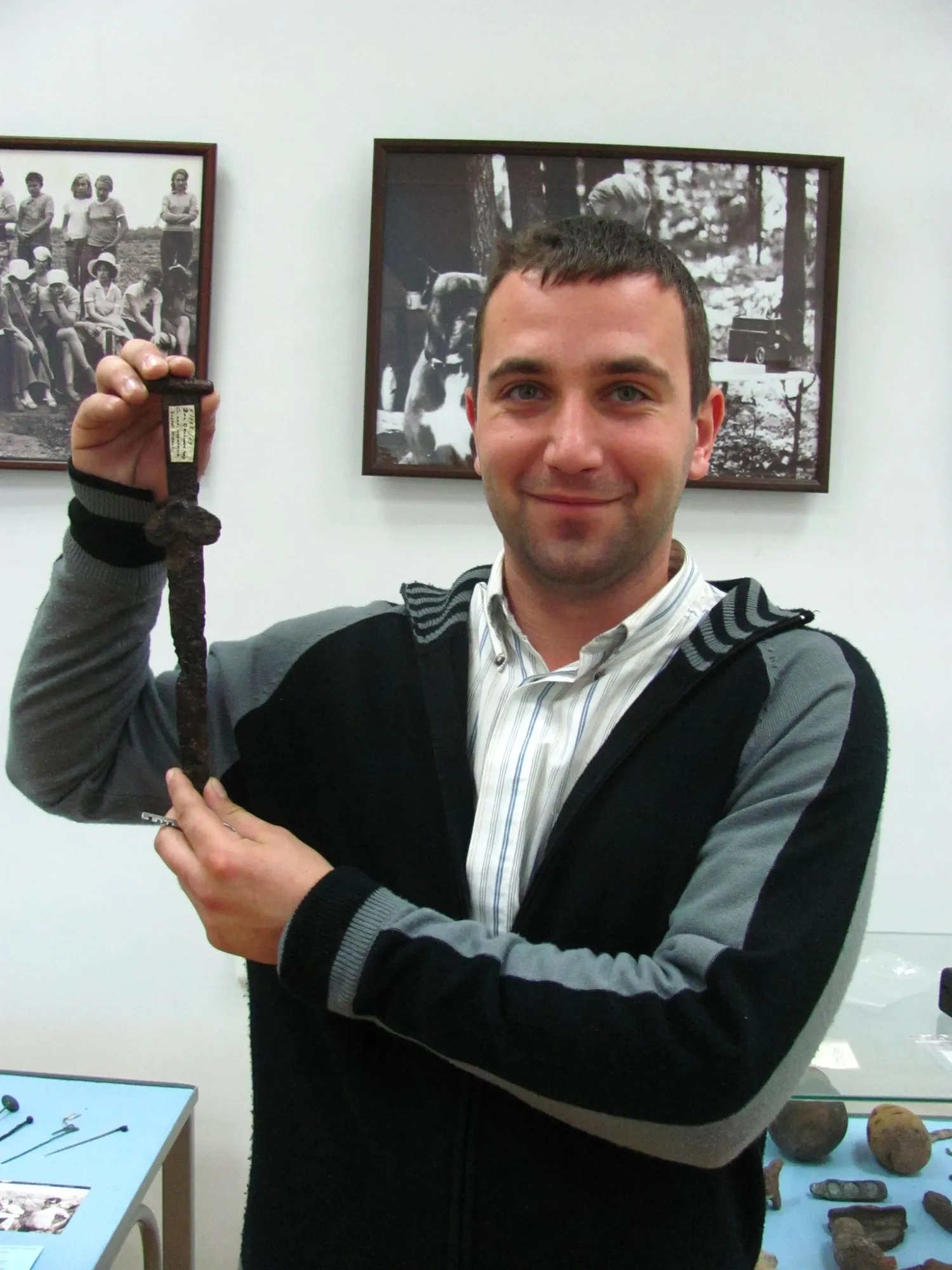
Oleksiy Kryutchenko
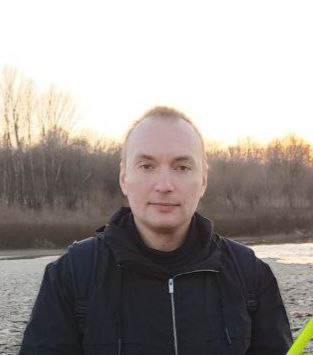
Eduard Mamnitsky
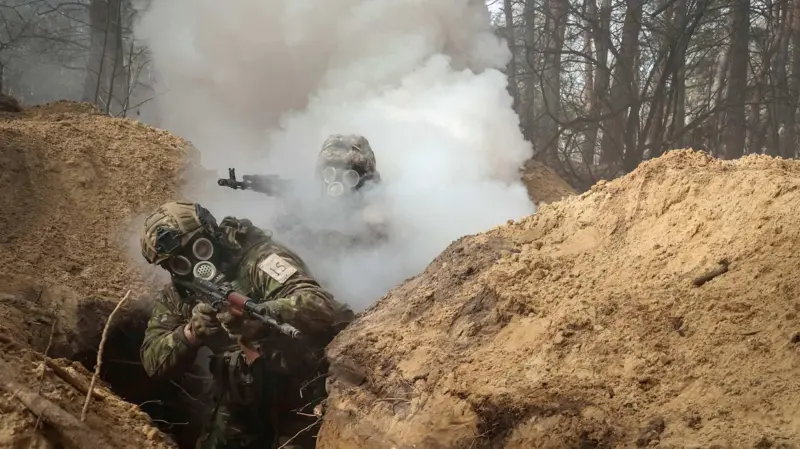
Chemical attack on Ukrainian soldiers. Photo from the Internet.
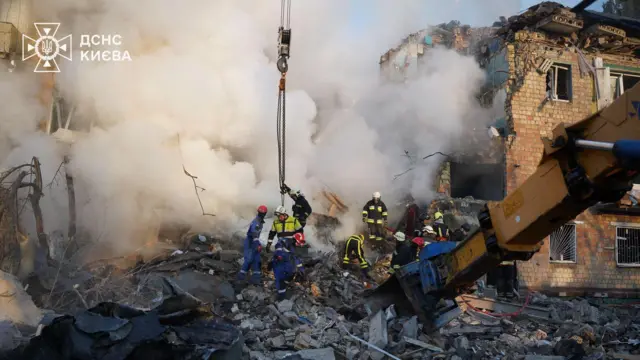
Asbestos dust during the demolition of a house (Kyiv, August 28, 2025). Photo from the Internet.
Oleksiy Kryutchenko
Eduard Mamnitsky
Chemical attack on Ukrainian soldiers. Photo from the Internet.
Featured Projects

WAR AND CANCER
Ukraine 2026. Survival Guide
The Table of Remembrance
Featured In Focus Articles
Featured Moments of Truth
Everyday people supporting citizens and the military to survive and to build possibility, during and after the war
Volunteer Projects